Wednesday, May 25, 2011

Spain, Portugal & Morocco - Part 3


Memories of our trip to MOROCCO:
Morocco has a wealth of deep cultural history and architectural tradition.  There are medieval cities, Roman ruins, Berber fortresses and beautiful Islamic monuments to see.
Morocco provides the taste of Islamic culture, Africa, and the developing world.  It can be quite a cultural shock, but it offers a unique experience.  It is full of contrasting images, exotic sights, strange smells and experiences.  It is full of variety and life.  Full of colors and fragrances.

Every Moroccan city has a Medina, the old quarter where the past still echos and the flow is never ending.  Here are found the craftsmen, the traders, and the hammam (traditional steam bath). 

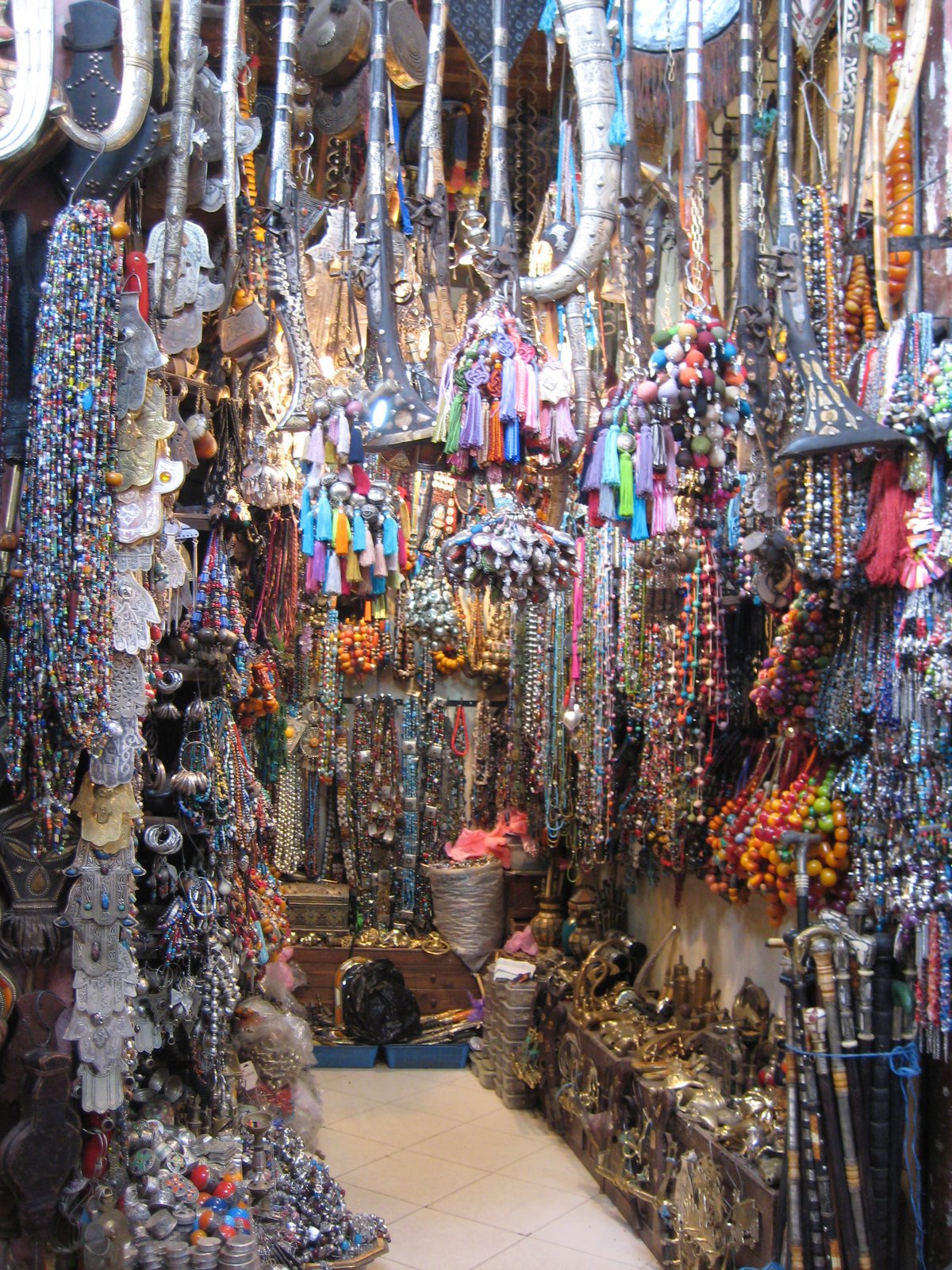
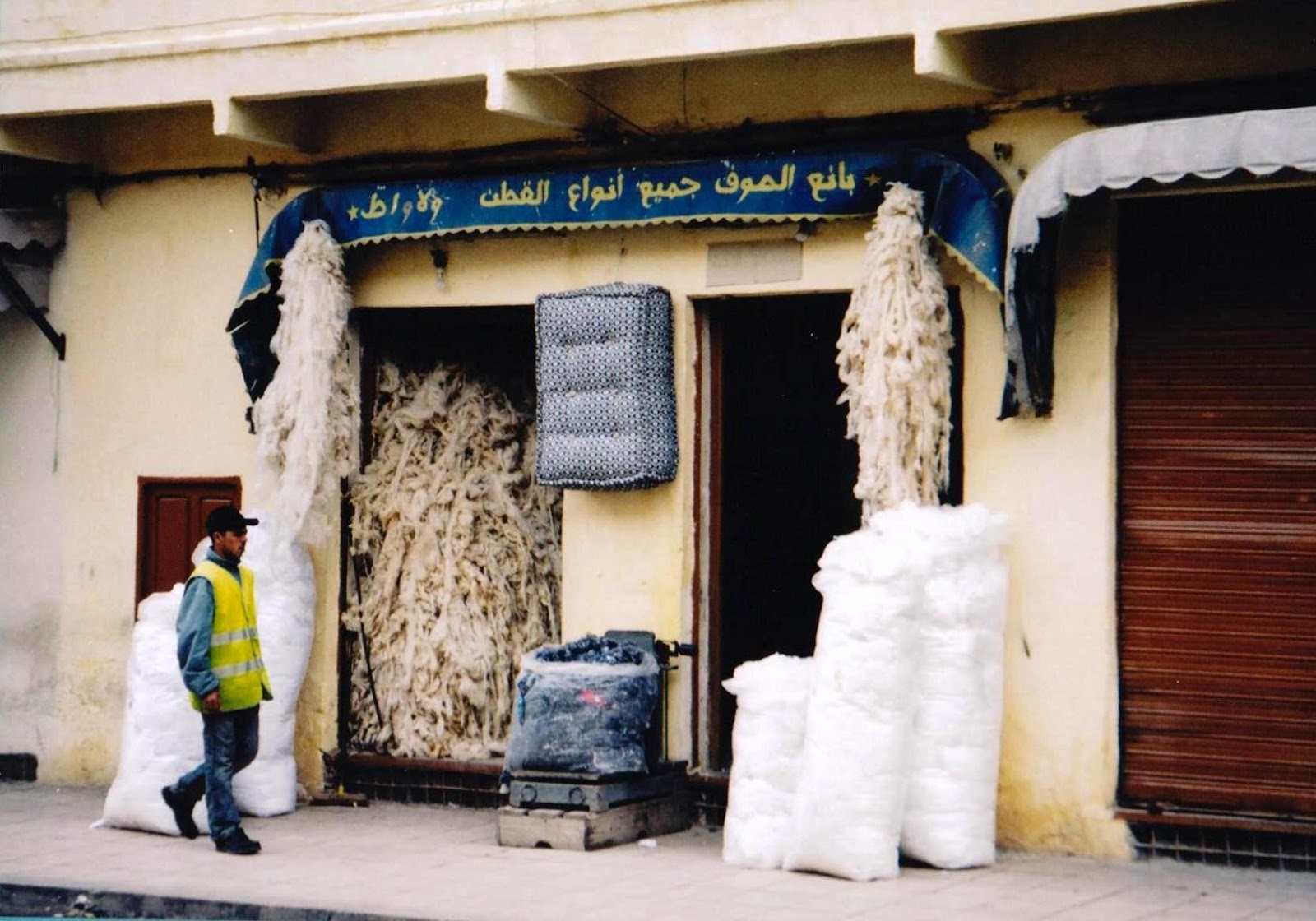
The souk or market, along with the mosque make up the main elements of a Muslim town.  "All roads lead to the Souk".  A treasury trove worthy of Ali Baba and guarded by massive gates, the souk is a succession of narrow alleyways, with back to back shops that are rarely bigger than a linen cupboard.  Tinsmiths, grocers, butchers, bakers, tailors, spice merchants, and cake vendors meet daily in mayhem.  In the souk, the merchant, perched atop of his colorful display of spices, calls to the passersby.  These are the spices that give their food a tough of color, taste and smell.
Currently, ten Moroccan dirham equals 1.51 Canadian dollars.

Sun. April 25
We reached the coast of Spain south of Seville at Algeciras were we boarded the ferry to go to Morocco.
Rock of Gibraltar
Then we were back on the bus travelling south along what was once Africa's infamous Barbary coast to Rabat, Morocco's capital.

Mon., April 26 to April 27th  RABAT, MOROCCO
We are staying at the Majliss Hotel in Rabat.
This morning in Rabat we visited the Royal Palace. 


There is an extravagant embellishment with the geometric mosaics which cover everything from the walls, floors, columns and fountains everywhere.


And the Mausoleum to Mohammad V.

Pictures from the Medina in Rabat:


Then we went further south to Casablanca, Morocco's largest and most cosmopolitan city, home of the extraordinary Hassan II Mosque.  Eternally immortalized by the classic film "Casablanca", the name of this city has a mysterious exotic ring to it.
The mosque in Casablanca is one of the  most beautiful ones I have ever seen with its amazing works of turquoise and blue mosaics, marble and granite.  It can hold up to 25,000 worshippers  inside and a further 80,000 in the outside courtyard.

Casablanca


April 26 to April 28  MARRAKECH, MOROCCO

Driving deeper into the heartland of Morocco by way of Settar,  we reached Marrakesh, the most enchanting city.  We are staying at the El Andalous Hotel.
Most of the buildings in Marrakech are done in a peach color plaster and everyone here is going somewhere fast.

Marrakesh


A tour of the Medina Palace in Marrakesh


Followed by the hustle and bustle of the old Medina in Marrakesh that takes you back to a long forgotten world. 


A lot of the alley ways are dark and closed in.
Here you will find the scent of exotic spices piled high for you to buy.


And pastries

Along with piles of babush slippers in all shapes, sizes and colors.  These are the common foot wear found here.  Men tend to wear yellow or white ones and women wear the bright colors and patterns.


And snake charmers,


...and a camel ride if you want...

We saw the water sellers wearing their colorful hats and ringing their bells.  They will sell you a cup of water or pose for your tourist pictures.


We decided to do an excursion from Marrakesh thru the Gorge of Oued Ourika to the Ourika Valley, in the foothills of the Atlas Mountains.  We travelled thru the quiet, peaceful green countryside.  In the background were the blue-grey mountains of the High Atlas.  We went along the river banks and meandered thru the mountain foothills, thru the villages built of baked clay and stone until eventually we stopped at a clay built Berber home. 

The average house in the village has a small kitchen and one room with small rugs on the floor, benches, and perhaps a small TV.  The whole family eats and sleeps here.  Most houses here don't have running water. 

We stopped to visit Omar and his family of eight.  The livestock lived in the ground level and their family lived in the upper rooms.  We were offered a glass of fresh hot mint tea poured from a silver pot into glasses and a couple of pieces of homemade Berber bread and olive oil.


Omar


Mint tea, the national Moroccan drink is so important in daily interactions that it is often jokingly referred to as Berber whiskey.  It is offered as a gesture of welcome and hospitality.

For supper this evening we were served a delicious traditional dish called "tajine" or "tangine".  A tajine is a dish from North Africa that is named after the special earthenware pot in which it is cooked.  The dish consists of a flat circular bottom base and a large cone shaped cover that rests inside the base during cooking over an open fire or a gas fire. 
Tajines in Morocco are slow cooked stews combining a meat such as lamb, chicken or beef, with different additions such as olives, lemons, apricots, raisins, dates, etc.  Traditional spices that are used to flavor tajines include cinnamon, saffron, ginger, turmeric, cumin, paprika and pepper.  This is a very aromatic dish while it is simmering because of the mixture of spices in it.  Many of the chicken dishes are enhanced with lemons which have been previously preserved in a salt-lemon juice brine.

Morrocan sweets are rich and made up of cinnamon, almond and fruit confections that are rolled in filo dough and then soaked in honey.
Wed., April 28 to April 29th  FEZ, MOROCCO
We enjoyed glimpses of North African village life while driving thru the Middle Atlas on our way to Fez this morning.  Population of Fez is 1,000,000.  We are staying at the Menzeh Palace Hotel.


Fez

Ancient Fez occupies a position of scenic beauty and is blessed with an ample supply of water.  Fez is the oldest of the Imperial cities and highly considered the heart of  Morocco.  Its Medina is one of the largest living medieval cities in the world.  Fes el-Bali is the area most interesting to tourists.  Its walls encircle and incredible 9400 twisting alleys, blind turns, and souks.  We are glad that we have a guide as finding our way around here by ourselves would be impossible. 
The Bab Bou Jeloud is the main entrance to the Medina in Fez.  It is found in the south west corner and the gate was built in 1913.

Going thru the gate in the thick wall to enter into the fairy tale magic of the Medina.
Its narrow winding alleys and covered bazaars are crammed with every conceivable sort of workshop, restaurant, meat shop, market, as well as mosques, and extensive dye pits and tanneries.
Donkeys loaded down with bricks and sacks are followed by their owners shouting at them to keep them moving.  They will also be shouting "barek"  meaning "look-out".   If you don't keep one eye over your shoulder you will be sure to get run over.


 Even though we have a guide, we search for orientation points in the pure chaos of the alleys - something that will allow us to find our way out - but there are no recognizable landmark or street signs that we can read.  So we go further and further into the labyrinth network hoping to eventually make our way back out.  People are pushing and shoving, yelling and talking, and there is commotion everywhere.  While trying to look at everything that surrounds us, we must keep a close eye on our guide.

Souks are also a daily destination where locals shop for fresh meat, vegetables, household goods and various other items.  Hundreds of small booths line the aisles offering everything from exotic spices, to snails, turkeys, chickens, to traditional fabrics, shoes and various pastries.


The Medina is divided up into areas occupied by various craftsmen such as copper and silversmith, horn carvers, tailors, potters, and leather workers. 


Wedding Chairs

The tanneries in Fez cling to practices developed in the medieval times.  At the tanneries little has changed in centuries.  Skins are carried by donkey to the tanners souk, tanning and dyeing vats are constructed from mud, brick and tile.  The tannery workers (strictly male) are still organized according to medieval guild principles, and their health and safety practices are also scarily old fashioned, too.
Along with being Morocco's oldest arts, with a history that stretches back at least 7000 years, leather-making is undoubtedly also one of the smelliest.  When you go to view the tanneries from the roof top you are offered a sprig of mint to hold under your nose to mask the rank odours.  The mint barely masks the stench, but does seem to help the nausea that tries to set in.  In this day and age it is unbelievable to see the way this job is still done!


Tannery
  All around you there is a jumble of voices and sounds and then you will hear the call to prayer "Allahu akbar" in the near distance. There are so many sounds, colors, smells and activities closing in on you that you will all of a sudden feel confined and over loaded.

After this hectic day of hustle and bustle, we are glad to get back to our hotel "Menzeh Hotel Palace" where we are served tea poured from high above the glass as a welcome.
Menzeh Hotel Palace

April 29 to April 30  TANGIER, MOROCCO
We are in Tangier, Morocco staying at the Mercure Almohades Hotel.

Spain, Portugal & Morocco - Part 4


Friday, April 30  Tangier to Costa Del Sol, to Granada, Spain
This morning we left Tangier, Morocco and crossed the Straits of Gibraltar to mainland Spain, again.  We then took a scenic drive thru some of the Costa del Sol's famous seaside resorts to Malaga and then Westwards to Granada, Spain.

Saturday, May 1  Granada and Madrid, Spain
This morning we headed up the hill overlooking the city of Granada and took a tour with a local guide of the Alhambra Palace, a summer palace built by the Moorish kings.  We wandered thru the Alhambra looking at the mix of Arabic architecture and the newer European additions.  It's  architectural beauty, beautiful ceilings and gardens are well worth the time.  The plaster work is what gets the most attention as it is very beautiful and very extensive.  But there is also extensive tile work, too. 
The gardens surrounding the Palaces are also extensive.  The Arabs made a very comprehensive irrigation system to keep the whole place watered and green.  This irrigation system is amazing in itself.


This afternoon, we drove into the heart of La Mancha, famed for its castles and windmills.

We will be staying overnight in Madrid at the Praga Hotel, again.  This is were we first started our tour.
We find ourselves going back for tapas at the tapas bar on the street down from the hotel. 


Tuesday, March 29, 2011

The Year 2011

I found this interesting:
This year we are going to experience four unusual dates, those being:
1/1/11,   1/11/11,   11/1/11,   and 11/11/11.
And that's not all...  take the last two digits of the year in which you were born, then add the age you will be this year, and the result will be 111 for everyone...!!!  Yes, it does work!  Try it!
Also, this year October will have 5 Sundays, 5 Mondays and 5 Saturdays.  This happens only every 823 years!  These particular years are known as "Moneybags".  This is the year of money!!  Hopefully this is true, too.
Not sure who figured all of this out - but it does seem to be true.

Still waiting for spring...

Tuesday, March 15, 2011

San Francisco, & California Coast


Looking back to...
After reading about the "El Camino Real" California's Bellway we decided to go on a road trip along the coast of California and also to see San Francisco. 
The El Camino Real road was founded in the 18th century to link the Franciscan missions and four military presidios of Spanish California.  This road also known as the "Royal Road" is known today as Highway 101, the first road between San Francisco and San Diego.  Here we will explore the still-standing missions.
We decided to go in the end of May as school is still in, the roads not as busy and the weather is pleasant.  (Don't plan to swim in the ocean at this time of the year here as it is just to cold.)
Thursday, May 25
We arrived in Los Angeles from Calgary by air at 1:00, rented a car and then drove to Santa Barbara in heavy, heavy traffic.  We stayed over night here and enjoyed walking on the beach.


Santa Barbara

Friday, May 26
It took us 6 1/2 hrs to drive from Santa Barbara to San Francisco inland on the I-5  freeway.  Along the way we saw lots of different landscape - ocean, hills, wineries, fields of cabbage, onions, strawberries. We went from four to five lanes of one way traffic funneling down to one lane going into downtown San Francisco.  It's very busy!!  Glad to get the car parked and checked in to our hotel "Handley Union Square Hotel" which is very nice and in a great location for walking. 

Saturday, May 27
We had read in the AMA travel guide that there was a good walking tour of San Francisco and decided to do that.  After breakfast at the Baseball Diner next door we left to walk to China Town. 

All the different smells, sounds and sights give you sensory over load.  We walked down the main avenue "Grant Ave" for ten blocks.  It is crammed with all kinds of stores - herb shops, antique stores, sculptures, souvenir shops filled with Buddha's, silk, postcards, embroidered slippers, chirping birds, t-shirts, Chinese signs, and purple chickens. 


It would take you days to explore all the side streets and shops.  We stayed on the main road going thru.  Red lanterns, banners and streamers hang all over. 
When you leave Chinatown on Columbus Ave. you see a contrast right away as there are Italian flags flying here.  This is North Beach (but with no beach).  It was time and this was a good place to stop for coffee.  There are lots of Italian bakeries, delis, coffee and gelato parlors here. 

After coffee and live entertainment, we walk up hill to see "Telegraph Hill". 


We were glad that we had read the AMA guide book to realize what streets we should take to make walking up the hill easier and then that we should take the stairs back down.    Instead of trying to walk up the stairs - all 400 of them - like some people were trying to do.
At the top of the hill is Coit Tower which has terrific views of the Golden Gate Bridge, Oakland Bay Bridge, Alcatraz and all of the Bay and the city.  Coit Tower was built in 1933 and is 210 ft tall.  Well worth the walk!

Alcatraz Island

Golden Gate Bridge, San Francisco

This is also the area that you will find the stairs to take you down  and where you will see the wild parrots if you look up above the tree tops. 

It was neat to see these bright green parrots flying above the trees after seeing the movie "The Wild Parrots of Telegraph Hill".  This movie is about a homeless musician, Mark Bittner and how he found meaning in his life as he starts a friendship with dozens of wild parrots on Telegraph Hill in San Francisco.  They are cherry headed conures and one lonely blue-headed one named "Connor" who flock around Telegraph Hill.  Mark started to feed them and then studied the individuals and their personalities.  It is a great show about these birds and a warm-hearted man.  Watch the making of the movie and see the second part of the movie behind the scenes - Mark and Judy Irving the movie's producer  married after making the movie.

 It is a really nice walk down the hill, walking beside private houses built on this steep hillside with beautiful gardens and great views to look out at. 


Take "Filbert Street" down to Embarcadero, and then walk along Embarcadero to Pier 39.  Here there are all kinds of restaurants with seafood and it is very touristy.  There are plenty of sea lions laying up on the piers in the sun and barking. 

From Pier 39 we took a taxi back downtown.  This was a full day of walking and exploring - but totally worth it.

Sunday, May 28
Breakfast at "Lefty O'Douls". 
Took the trolley F-Line up Market Street to Church Street.  Here we walked to the Mission Dolores.  Completed in 1791, this adobe mission is the oldest building in San Francisco.

This area is an area of working class and the poor.  We then walked to Mission Street and 16 St.  Here there were crowds gathered along every street to watch the Carnival Parade and the celebrations of the Latin American and Caribbean cultures.  We saw a lot of very interesting looking people in this small version of Mardi Gras.  There are lots of interesting buildings in this area - some with great paintings on them.


Later in the day we walked around the downtown as there is so much to see in this area.  There are so many high end stores - Cartier, Versace, Armani, Marc Jacobs, Saks, Macy's, Tiffany, plus hundreds of others.  You'd be in heaven if you are a shopper.  But what interests me are the art galleries as there are so many of them, too.  I am seeing some very different work here.  This area feels safe and is very busy as we walk around it at night.  There are the rich, the poor, the homeless, the hipsters, the gay, the odd-ones, etc. etc.  It is an interesting place just to people watch.
And an interesting place to dine as there are also many different types of restaurants.  So much to choose from!  And everything all open on Sunday night.  Does this city ever sleep??

Monday, May 29
We leave San Francisco to start our driving tour of the "El Camino Real Bell" and the coast of California. 
In 1769, it was just a footpath begun by the Franciscans.  Each mission was situated in areas where large populations of Indians lived and where the soil was fertile enough to maintain settlement.  As time progressed and more missions were built, the footpath became a roadway large enough for horses and wagons.  The original goals of the mission system were to turn the Indian population into citizens of the Spanish Empire and mission communities into self-governing towns.  This plan was to be completed in ten years.  These goals were not fulfilled in California.
We left San Francisco to head south along the coast to Carmel.  The drive is beautiful along the coast.


We walked from our hotel in Carmel to the mission "Basilica of Mission San Carlos Borromeo Del Rio Carmelo".  It is noted as being "one of the prettiest in California".  The dome, bell towers and exterior have a Moorish look. 

...and my sketch of Carmel Mission...


This was the 2nd mission of California and was founded in 1770.  It is being carefully restored and it is very peaceful here.

Tonight we walked along the Carmel beach waiting for the sun to set.  We could see the Pebble Beach Golf Course.

Tuesday, May 30
We are leaving Carmel  and travelling down further on the most beautiful coast.  Here it starts to get rugged with cliffs. 

We took a side trip off of the #1 Hwy up a switch-back road for 3 miles to see the "New Camadoli Hermitage" (South of Big Sur).  The monks have a beautiful spot way up here and it is so quiet.

At San Simeon we stopped to see the Elephant Seals on the beach.  There were so many of them sunning on this beach and it was kind of funny as this was the only beach that we saw them on.

Next we stopped in San Luis Obispo to see the mission founded in the "Valley of the Bears" in 1769.  I found that this mission was not as interesting or as pretty as the one in Carmel.  It has gone thru many architectural changes, at one time it was even made to look like a New England style church and it has a steeple not a bell tower.  At one point in history, after 1822 when Mexico won independence and California came under Mexican rule, the new govt sold the mission for $500.00  In 1848, California became part of the United States and Archbishop Alemany petitioned the U.S. government for return of mission land; much was returned in the 1850's.  In the 1930's, the Mission was restored to early mission style.  Because of the mission's history it still it was worth the stop.  San Luis Obispo is a nice little city.
On to Pismo Beach where we will spend the night.


Weds., May 31
We had a late breakfast and sat out on the deck watching the dolphins in the ocean.  Next we drove on to Santa Barbara to visit the "Old Mission".   It was the tenth of the California missions and was established in 1786.  The original buildings were adobe.  The mission at Santa Barbara is set surprisingly far from the sea and today has an imposing pink-block facade in the style of a Roman temple, complete with columns.

"Mission Santa Barbara - Queen of the Missions"
  ...and my sketch of Mission Santa Barbara...


Last week when we passed thru here on our arrival in California, they were having a sidewalk art event at the mission.  The finished results were fantastic and to think that they will vanish in the near future.  There were probably at least 100 really good master pieces drawn in chalk on the parking lot and on the sidewalks!


Thursday, June 1
We drove from Santa Barbara back to Los Angeles.  Walked around Venice Beach for awhile and then went to stay over night at Redondo Beach before our flight back to Calgary.
This was an interesting trip with lots to see, lots to do, and lots of history and art.  Just what we wanted.  The coast is beautiful - but a long drive. It was a good time to take this trip as I think it would definitely have been busy during the summer season.


Monday, March 14, 2011

Greek Roasted Lemon Potatoes - Recipe

We both found these potatoes delicious and so I have tried to find a recipe for them that tasted the same as when we had them in Greece.  The following recipe is easy to make and our company always goes back for seconds and thirds!  This is definitely a dish to make with kabobs or roasted chicken.

GREEK ROASTED LEMON POTATOES

Ingredients
3 to 5 lbs Yukon gold potatoes or waxy white potatoes -peeled
1/2 cup fresh squeezed lemon juice
1/3 cup olive oil
2 garlic cloves, minced
1 tsp dried oregano
1/2 tsp salt
1/4 tsp black pepper
1 can (14.5 oz) chicken broth (use low fat and salt broth)

Directions
Peel potatoes and cut them in half  (quarter if potatoes are large).  Rinse and let stand in water while preparing sauce.
Combine all other ingredients in a large size zip lock plastic bag and shake to combine.
Dry off the potatoes and put them in the bag and let marinate for 2 hours.
Preheat oven to 400 degrees.
Put the potatoes and the marinade in a 13x9 baking pan or a flat casserole dish.
Roast for 1 hour 10 min., turning potatoes occasionally.
You can turn the broiler on for a few minutes to brown them more.

Note:  I make the recipe using a 5 lb bag of potatoes for 4 people and we are lucky if there are leftovers for the next day.  If the skins of potatoes are clean you can forgo peeling them, too.